Within the demanding arena of contemporary professional drifting, victory is far more than purely a product of sheer engine power or driver bravado. Conversely, it has become a multifaceted engineering challenge which requires a meticulous blend of selecting a time-tested car, arming it with the most precise competition hardware, and, most importantly, understanding its live characteristics on the course through sophisticated vehicle dynamics analysis tools. This definitive handbook will serve as your roadmap starting from the very first idea of a competition vehicle right through to the last engineering-refined adjustments that transform a strong car into a predictable winner. We will thoroughly explore the precise engineering of car suspension tuning, demonstrating how a modern suspension tuning tool like a dedicated telemetry system eradicates guesswork and delivers exceptional clarity into your vehicle's actual behavior.
The bedrock of any successful drift car is, indisputably, the chassis itself. A select group of cars have earned iconic standing within the international drifting community due to their inherent weight distribution, strong build quality, and the enormous availability of specialist components available. Picking the optimal starting point is the primary and most crucial decision a builder will make. For instance, the BMW E36 is universally acknowledged as one of the best all-around drift cars of all time. Its near-perfect balanced front-to-rear weight, combined with a RWD configuration and robust inline-six motors, establishes a car that is at once easy to handle for beginners and highly capable in the control of a professional pilot. The successor of this concept, the BMW E46, improves on these attributes with a more refined frame, broader track for greater confidence, and yet increased lock as standard from the factory. Another powerful contender in the top-level scene is the Corvette C6.
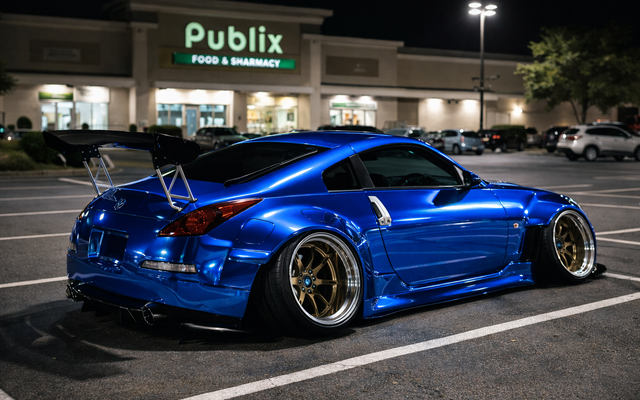
This V8-powered sports car introduces a unique combination of advantages to the sideways world, featuring a light aluminum chassis, a backwards-positioned drivetrain component that contributes to an perfect balance, and the immense thrust of a big LS V8 motor. This fusion renders it an complete weapon on track, able of initiating and holding long slides with relatively easy use of throttle. For drivers seeking outstanding value, the 350Z model Nissan excels as a prime choice. It arrives from the factory with a robust body structure, a effective original limited-slip differential, and the free-revving V6 powerplant that delivers ample power and torque for practicing and moving up in the sport. Its successor, the 370Z model, brings more refinements in chassis stiffness, suspension design, and overall motor power, solidifying its position as a popular selection among professional drivers. Other legendary platforms that deserve mention encompass the agile rotary-powered Mazda FC, the ubiquitous S13 Silvia/240SX, the American Ford Mustang SN95, the more recent BMW E90, and the compact yet incredibly fun and teachable MX-5 Miata. All of these chassis offers a distinct set of traits, difficulties, and possibilities, but they all possess the fundamental ingredients necessary to be transformed into a capable drift car.
However, selecting the right chassis is just the beginning. To release the full performance of every of these machines, substantial changes to the steering geometry and damping and springing systems are utterly non-negotiable. This is where the realm of performance tuning components enters critical importance. The most most transformative modification for a serious drift car is the integration of a drift-spec drift angle kit. These sophisticated systems, for example those developed by industry leaders like SLR Speed, are designed to radically expand the chassis's available steering angle. A OEM road car is severely constrained in how far its tires can rotate, a engineering compromise for daily operation. In drifting, conversely, maximum opposite lock is constantly required to manage and sustain a drift. An steering kit substitutes the stock uprights, rod ends, and potentially control arms with parts that enable the steered wheels to achieve steering lock in excess of 70 or even 80 °, compared to a typical OEM setting of around 40 to 50 degs.
This vastly greater steering angle gives the driver with significantly greater command during a drift, allowing it to be far more straightforward to start a drift, sustain it through a extended turn, and switch seamlessly from one side to the opposite. The difference in controllability is absolutely revolutionary. Combined with a properly chosen steering kit is the just as essential enhancement to the vehicle's suspension. Off-the-shelf or even expensive street dampers are just not intended for the specific and extreme requirements of drifting. A dedicated system of coilovers is paramount. These specialized coilovers feature unique piston tuning and spring strength that are designed for the rapid load shifting that is characteristic of drifting. When a operator starts a slide, the car's mass is shifted rapidly to the outside of the corner. Optimal drift-spec suspension control this transfer in a controllable way, enabling the vehicle to find its balance promptly and providing the driver accurate feel through the steering wheel and seat. They furthermore enable precise setting of ground clearance, rebound and compression stiffness, and corner weighting, which are all fundamental parts of optimizing the vehicle's dynamics to a particular track or competition technique. Together, a precision-engineered steering angle kit and a correctly chosen set of performance coilovers are the absolute physical cornerstone upon which all later tuning is constructed.
Once the essential components is in place, the following vital step in the project is the meticulous setting of the vehicle's wheel angles. This is the realm of vehicle alignment optimization, a procedure that can seem overwhelmingly complex to the beginner but is, in practice, the key to transforming a collection of capable parts into a unified and predictable machine. The most discussed element of alignment for sliding is definitely camber angle. Wheel camber is the tilt of the tire relative to the perfectly straight plane when looked at from the forward of the chassis. If the top of the wheel is tilted towards the car, this is known as camber-in. In sliding, inward-leaning wheels on the front wheels is generally employed and is regarded as essential. The reason is fundamentally tied to vehicle dynamics.
When a car is turning at high slip angles, the chassis leans towards the outer of the corner. This chassis roll makes the outside front tire to lose its ideal grip area with the track surface. By applying negative camber, the tire is pre-angled to compensate for this tilt. As the car tilts into the turn, the outside front tire becomes more upright against the road surface, maximizing its bite at the critical point when it is absolutely essential for steering authority. Usually, front camber settings for a dedicated drift car fall between approximately -3 degrees to as extreme as -5 degrees or even greater, depending on the specifics of the chassis setup, tire type, and operator style. The rear tires also employ inward tilt, but the angles are usually more modest and subtler than the front axle. Too much negative camber at the back can cause the vehicle to extremely prone to oversteer and challenging to manage on power input, as it diminishes the effective grip area of the powered wheels during linear acceleration. Hence, rear adjustments are frequently in the ballpark of -1 degree to -3 degrees, striking a precise equilibrium between offering enough cornering grip to aid in entering and holding the slide while also preserving usable hook-up for exiting the turn. Camber is just one component of the larger alignment picture, which furthermore involves toe angle, caster angle, and suspension-induced steering correction.
Toe setting describes the direction of the tires as seen from a bird's-eye view. Toe-in means the leading edges of the wheels are nearer together than the rear edges, while toe-out means the reverse. For sliding, a small amount of front toe out is frequently employed to improve the initial response steering feel, making the vehicle feel more responsive and ready to start a drift. Rear axle toe setting is usually set to zero or a very slight amount of positive toe drift telemetry software to encourage straight-line stability under power. self-centering is the longitudinal or aft inclination of the kingpin axis when observed from the lateral of the chassis. More caster increases steering feel and stability confidence, and it also increases camber effect during turning, which is extremely advantageous. Adjusting these parameters is a complex interaction where a modification to one parameter can and often will impact the others. The old-school process for setting a chassis's suspension geometry for sliding has for a long time been a time-consuming endeavor of guesswork and adjustment. A pilot or crew would apply a adjustment based on experience, run the vehicle on track, use the driver's subjective feel and impressions, and then introduce an additional change. This loop would continue again and again until the car felt "right" or the available testing session ran out. This approach is not only extremely slow in terms of hours and tires, fuel, and parts, but it is additionally fundamentally flawed.
Pilot sensation is a infamously inconsistent metric, influenced by countless factors such as fatigue, changing track surfaces, temperature, and simply the mindset of the driver on that given session. What feels "tail-happy" on one run might feel "tight" on the following lap, causing conflicting data and ineffective changes. This traditional problem in car suspension tuning is specifically where modern telemetry systems has intervened to revolutionize the methodology.
The development and integration of specialized vehicle dynamics tools has introduced a completely new paradigm for building and refining professional drift machines. This new generation of platforms, exemplified by groundbreaking systems like modern telemetry hardware, function by physically recording the live mechanical performance of the vehicle as it is operated on the circuit. As opposed to relying on subjective impression, these tools gather objective metrics on key variables such as suspension travel, individual tire rotation, acceleration forces, steering angle, and accelerator and brake pedal position. This raw information flow is then analyzed by sophisticated applications that can plot and interpret the information in a comprehensible way. For the first time ever, drivers and crews can observe precisely what the chassis is doing at every moment of a lap. This capability changes the whole chassis setup workflow. Consider the specific goal of setting the front axle negative camber for a given chassis. Rather than making a change from -3 degrees to -3.5 degrees and then driving many passes to try and "perceive" a improvement, a telemetry system can deliver instant and clear feedback. The tool can display visually how the wheel's contact patch is acting during the critical stages of a drift: initiation, holding the angle, and changing direction. It can reveal if the existing camber setting is allowing the outside front tire to achieve ideal loading or if the compound is working inefficiently on its outer shoulder.
The system can subsequently make data-driven recommendations for change. Perhaps the telemetry indicates that the tire is even stressing its edge at -3.5 degrees of camber, suggesting that an increase to negative camber, say -4 degrees, might be warranted. On the other hand, the data might indicate that the tire is failing to reaching heat or that the inner edge is degrading excessively, which could indicate that there is overly aggressive negative camber and a slight decrease back to -3.2 degrees would be better efficient. This standard of precision and actionable intelligence was literally impossible in the time of pure mechanical setup.
The effect of employing a dedicated suspension tuning tool goes much further than merely optimizing camber. It serves as an essential coilover setup tips that is customized to your specific chassis. When setting the damping values on your adjustable dampers, rather than using general guidelines or replicating another car's numbers, you can employ the data to observe how the car is reacting in response to your adjustments. The tool can show the suspension travel data over a section of track, highlighting if the shocks are managing the body movement effectively or if they are causing the vehicle to become unsettled too much after a direction change. It can help in pinpointing problems like hitting the bump stops or losing droop, enabling you to introduce educated decisions to spring preload, damping rates, or ground clearance. This approach applies just as well to the detailed task of suspension geometry optimization. In addition to camber angle, the system can give data into how changes to toe and caster angle are influencing the vehicle's balance during various parts of a drift. For example, it can help you to ascertain the best amount of front axle toe-out for your particular steering rack geometry and competition style by measuring the quickness of initial response and the stability of the vehicle at lock countersteer. This transforms the software an incredibly powerful performance optimization handbook that is constantly calibrated by the real-world dynamics of your personal chassis on the circuit. It elevates the entire project from a subjective skill into a scientific engineering procedure.
Moreover, the application of a platform like GripDial is not at all confined to expert teams with large funding. For the car alignment tuning amateur driver, it serves as an incredible educational tool. It practically offers the builder with the knowledge of a expert dynamics engineer without requiring the associated overhead. It accelerates the development time by giving definitive answers to challenges that would otherwise take seasons of trial and error to solve. A tuner can see how their particular vehicle behaves to different inputs, developing a more profound comprehension of car control in the process. It also democratizes high-level suspension engineering techniques, enabling anyone with the ambition to perfect their machine to accomplish it in a efficient and successful fashion. This is especially important in a sport like drifting, where setup expertise has in the past been a highly secretive asset among top drivers. Today, that knowledge can be in the toolkit of any motivated driver.
In summary, the path to building and optimizing the ideal championship-contending drift car is a multi-stage suspension tuning tool project that seamlessly blends proven hardware knowledge with revolutionary data technology. It starts with the informed selection of a capable car, then enhanced by the installation of critical drift-spec components like maximum-angle angle modification systems and expertly specified competition suspension units. The build then moves into the precision stage of car suspension tuning, where values like negative camber, toe, and caster are meticulously configured to complement the car's modified geometry and the driver's specific style. The final step, and what genuinely distinguishes the modern approach from the past, is the use of a advanced vehicle dynamics tool. This tool eliminates the approximation and trial and error of only seat-of-the-pants adjustment by delivering objective, actual information on how the car is actually performing. It functions as an indispensable diagnostic aid, a comprehensive drift suspension tuning guide, and a all-in-one performance analyzer. In unison, this integrated approach guarantees that each and every component of the competition vehicle—from the selection of the car to the most minute adjustment on the coilover—is refined for maximum performance on the track. It embodies the total maturation of the discipline of sliding, merging raw driving skill with data-informed vehicle setup to build the ultimate competitive cars imaginable.